
Today, the bar code can be found anywhere, from your store checkout to concert tickets, or even on the side of a city bus. Did you know the concept of encoding data into printed symbols for scanning is now 75 years old?
A quarter century later, Point-of-Sale systems became practical for American grocery stores, and in the following decades, bar coding exploded into an everyday essential.
What began as simple product identification now powers global supply chains, streamlining everything from manufacturing and inventory to logistics. Major industries, from automotive to pharmaceuticals, rely on bar codes for speed, accuracy, and quality control.
Beyond commercial use, consumers regularly scan bar codes for event tickets, restaurant menus, social media apps, billboards or right off their TV screens. The concept of interweaving these symbols into our day-to-day lives seemed like science fiction not long ago.
It’s all about sharing information quickly, accurately and consistently. And the demand for more information, more speed, and more flexibility will continue to drive things forward.
So, where are things going from here? In this series of blog posts, we will be looking at the emerging trends, how you can implement and take advantage of these new technologies, and how T.L. Ashford’s Barcode400 and TLAForms applications can prepare you for that future.
We will look at the continuing trend of traditional linear bar codes being replaced with more sophisticated and functional two-dimensional symbologies like QR Code, Data Matrix and PDF-417 as GS-1 begins to implement their Sunrise 2027 initiative.
Smart Data Capture will soon allow barcodes to provide not just information, but context: who scanned it, when, where, and why. This data will improve workflows and highlight issues. Devices will be able to scan other sources in combination with bar codes to provide additional functionality and a more detailed picture.
Imagine scanning multiple containers simultaneously, with an app directing you to the correct product to pull or indicating that a product needs restocking – all from a single scan.
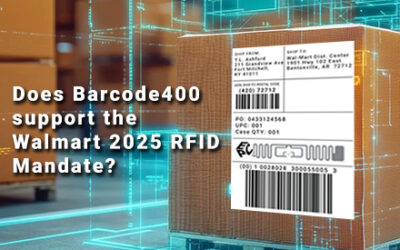
Future posts will explore how AI and RFID will further enhance the supply chain providing faster, more detailed and reliable data, even when a bar code label is damaged or unreadable by traditional scanners.
Stay Tuned!